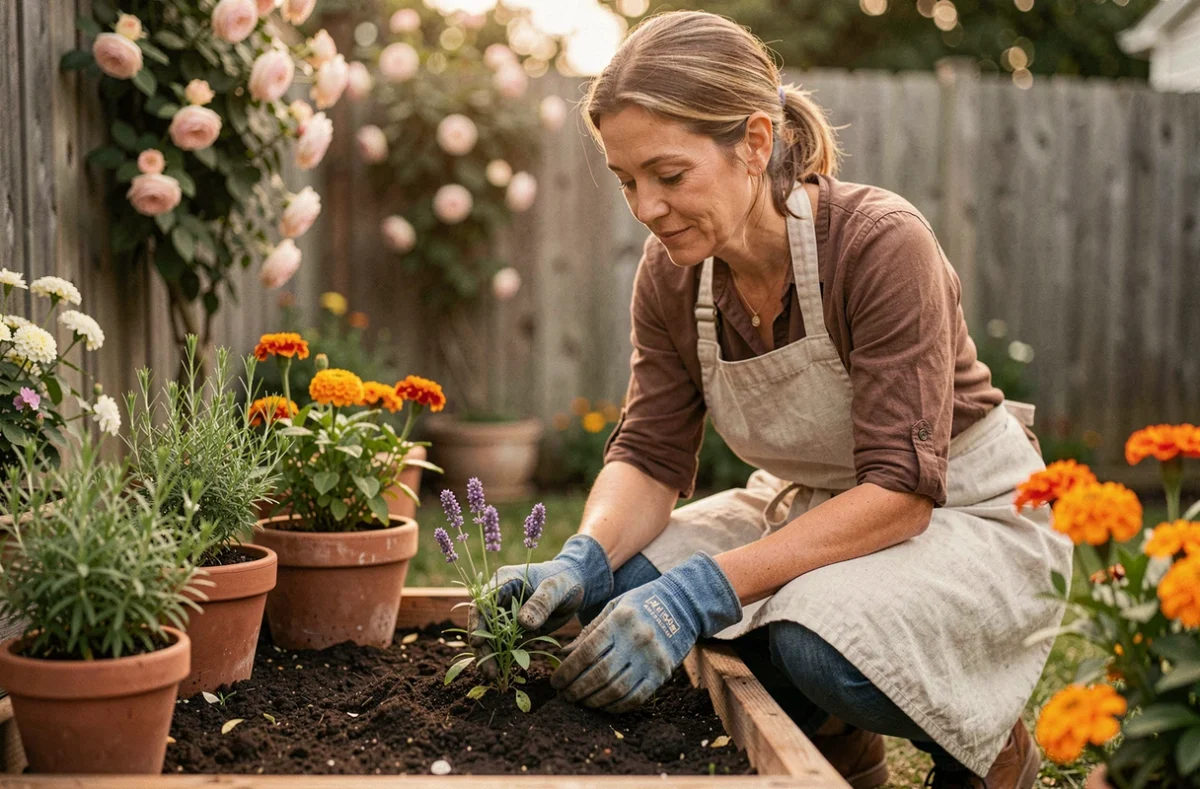
Clay soil that sticks to boots in winter and cracks in July, a south-facing exposure with no water source nearby: we often start from constraints, not from a dream on glossy paper. Creating a beautiful and easy-to-maintain garden begins with accepting these realities rather than fighting them. Prefectural orders can now limit or even prohibit the watering of flower beds and lawns depending on the level of drought. It’s better to design a space that thrives without constant assistance.
Soil and exposure: the diagnosis that avoids planting mistakes
Before buying any plants, dig a hole about thirty centimeters deep. Sandy soil crumbles between the fingers, while clay soil forms a compact ball. This simple observation conditions everything else: drainage, choice of plants, frequency of watering.
Exposure is just as important as the nature of the soil. A south-facing facade without a windbreak dries out plants in just a few days of heatwave. Conversely, a damp northeast corner is suitable for ferns and hostas, but not for lavenders. Crossing soil type and sunlight direction guides every planting decision.
You can also find practical sheets on Le Monde du Jardin that help identify plants suited to each type of terrain. Taking this time for analysis at the start saves entire seasons of trial and error.
Drought-resistant perennials and ground covers: the foundation of an autonomous garden
Field reports are clear: communities that have switched to perennials at the expense of annuals see a significant reduction in maintenance time and water consumption. In Caluire, this transition was accompanied by a shift to watering with harvested rainwater.
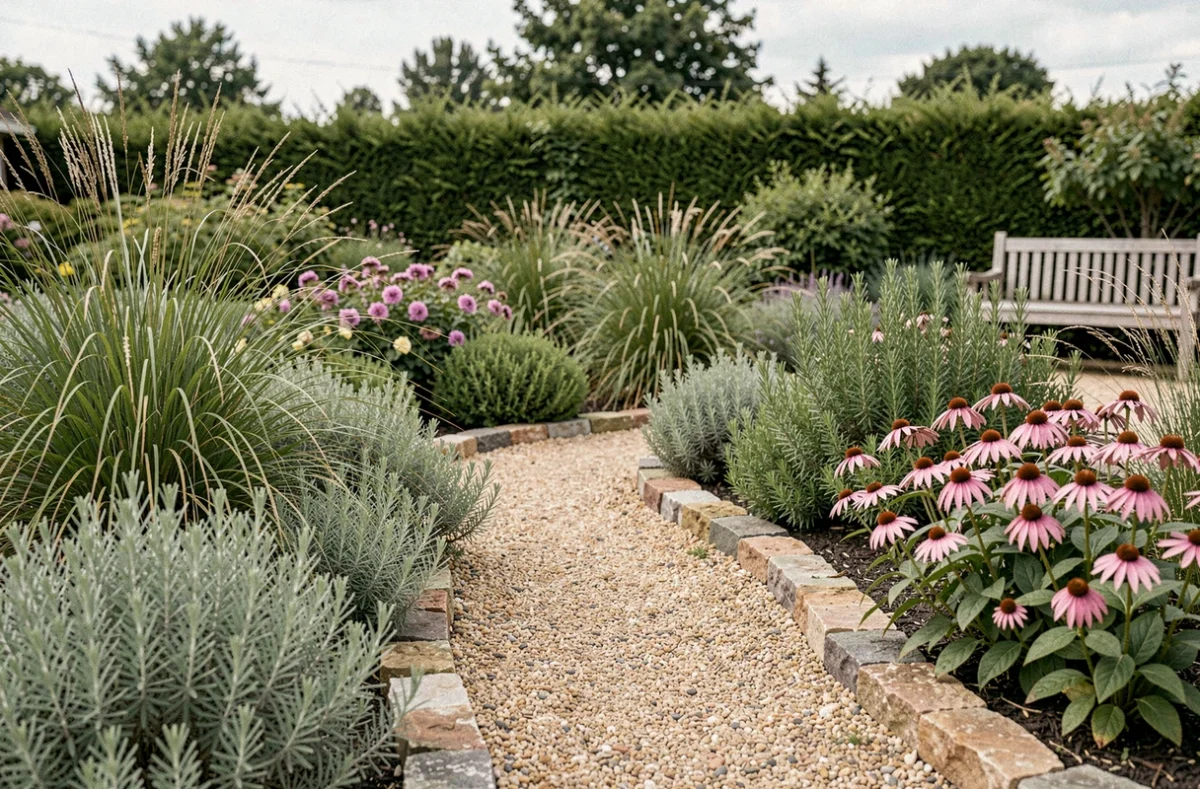
For an easy-to-maintain garden, prioritize plants that require neither annual repotting nor daily watering. Here’s a reliable foundation:
- Stonecrops and houseleeks cover the ground in a few months, withstand drought, and require no regular pruning.
- Shrubby salvias and Buenos Aires verbena bloom for a long time, attract pollinators, and tolerate poor soils.
- Ornamental grasses (fescues, stipas) add movement without maintenance, aside from cutting back at the end of winter.
A bed composed of 70% perennials reduces the need for renewal to almost zero. You can optionally complement it with a few annuals for a splash of color, but they no longer form the base.
Mulching and water management: reducing watering without sacrificing aesthetics
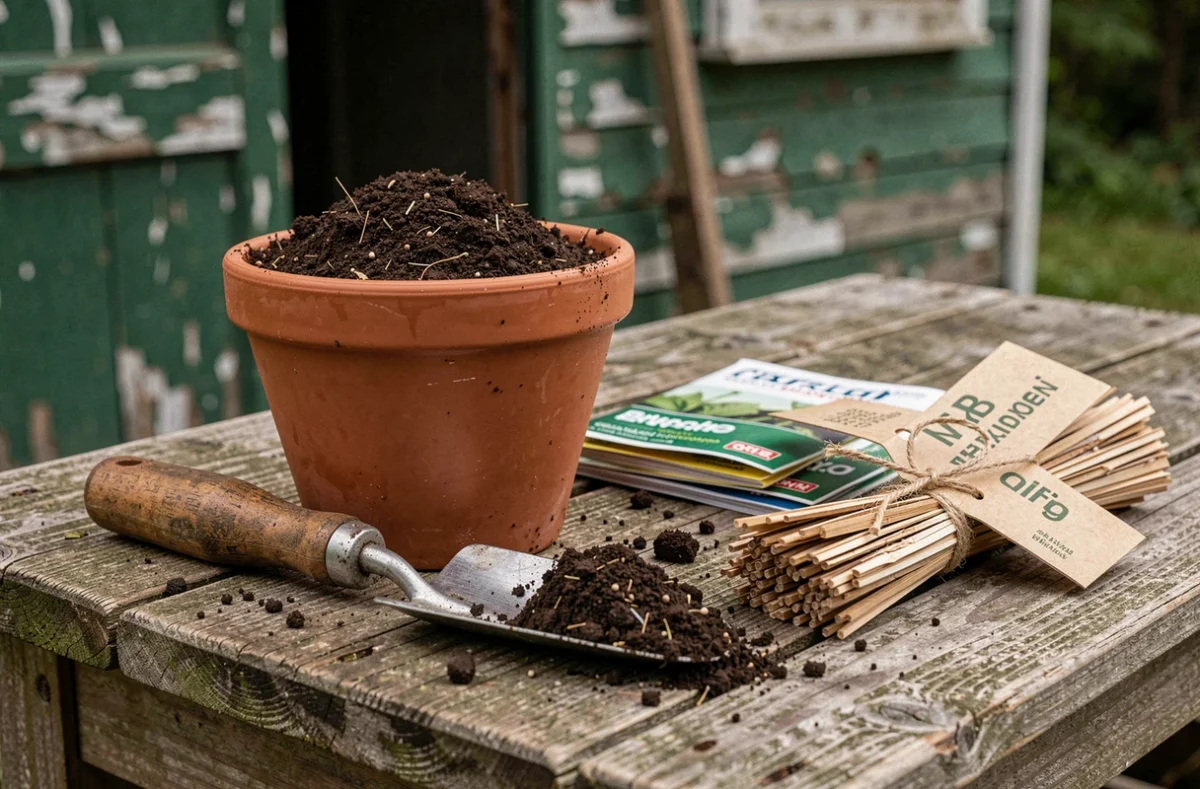
Mulching is not a decorative option. A thick enough layer of wood chips, flax straw, or buckwheat hulls limits evaporation, slows down weeds, and nourishes the soil as it decomposes. It should be renewed once or twice a year depending on the chosen material.
When it comes to water, rainwater harvesting remains the most cost-effective solution in the long term. A collector connected to a downspout often covers the watering needs of a small garden during the driest months. Mulching and collecting rainwater are the two actions that most significantly change the maintenance load.
Feedback varies on the effectiveness of oyas and homemade drip systems, but the principle remains the same: deliver water to the base of the plant slowly, rather than watering the surface with a spray.
Mosaic mowing and free zones: rethinking the lawn for less work
The model of uniformly short grass requires weekly mowing, fertilizing, and sometimes selective weeding. Specialists remind us that no lawn is truly waterless, even species reputed to be resistant like zoysia or kikuyu, which require watering at installation and maintenance suited to foot traffic.
Mosaic mowing offers a concrete alternative. Keep short-mowed areas for pathways and play areas, while allowing other sections to grow taller. These unmowed areas spontaneously host wildflowers, attract pollinators, and reduce mowing frequency by at least half.
You can also replace certain portions of lawn with walkable ground covers (thymus serpyllum, dichondra) that do not require mowing. The aesthetics change, but the workload decreases dramatically.
Naturally shaped shrubs: less pruning by choosing better
A beautiful garden does not require perfectly trimmed hedges. Naturally shaped shrubs (abelia, kolkwitzia, cornus) maintain a harmonious silhouette without severe pruning. An annual intervention, at the end of flowering, is enough to maintain their shape.
To structure a space without creating a recurring chore, choose species whose adult size corresponds to the available space. Planting a cherry laurel in a two-meter-wide bed guarantees quarterly pruning sessions. A choisya or dwarf pittosporum occupies the same volume without overflowing.
In terms of colors and shapes, you gain coherence by limiting the palette to three or four dominant shades. An easy-to-maintain garden is not monotonous: it is simply designed so that each plant has its place without competing with its neighbors.
Regulations also have a say. For a few years now, certain invasive plants have been banned from sale in France. Before purchasing an attractive plant at a garden center, checking that it is not on the list of invasive exotic species avoids a nasty surprise and protects the local ecosystem.
An easy-to-maintain garden is not an abandoned garden. It is a space where every choice of planting, material, and water management has been made to reduce interventions without losing character. The work focuses on design, not maintenance.