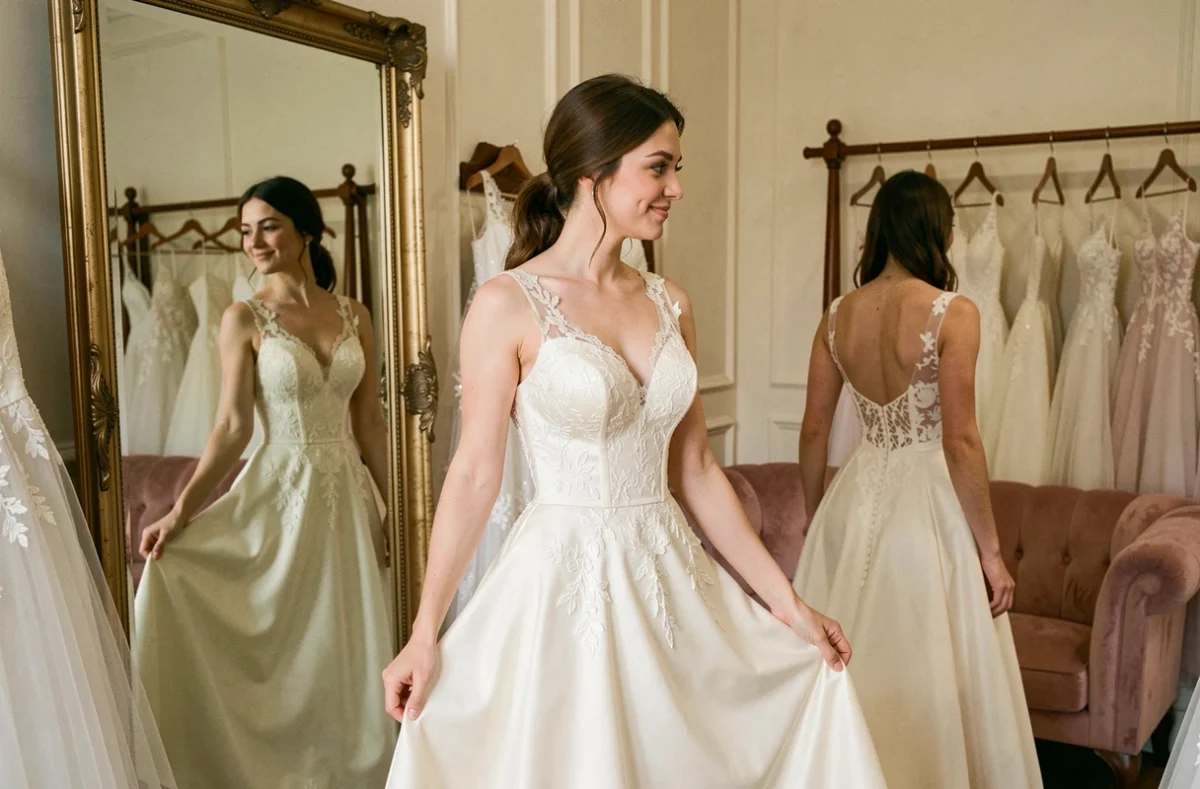
A wedding dress chosen without taking the day’s actual movements into account often ends up needing urgent alterations or simply feeling uncomfortable. In Nantes, the journey between the town hall, car transfers and the reception venue places practical demands on the cut, fabric weight and train management. Planning for these factors from the first fitting helps avoid costly alterations and last-minute compromises.
A wedding dress that works in the city: cut, train and mobility in Nantes
In France, a civil wedding must take place before any religious ceremony, and it is held at the town hall, in a room open to the public. In practice, the bride-to-be will climb stairs, sit on a narrow chair, stand up several times and sign a register. A cathedral train or an excessively voluminous skirt can turn each of these movements into an obstacle.
For a day that includes the town hall, trips around the city centre and a reception, a detachable train with a button fastening is the most practical solution. Wear it long for the ceremony, then remove it before getting into the car. Crepe sheath or mermaid dresses offer considerably more freedom of movement than layered tulle skirts.
When browsing wedding dresses in Nantes, always ask whether the outfit is modular: a convertible bodice, detachable overskirt or removable sleeves. These options are not just an aesthetic whim; they determine how comfortable you’ll be throughout your wedding day.
One often-overlooked point: your fitting should include the shoes you’ll actually wear and a sit-to-stand test lasting several minutes. A dress that looks stunning when you’re standing still may compress your diaphragm or ride up over your hips as soon as you sit down.
Fabric and textile weight: choosing for Nantes weather
In Nantes, showers can arrive at any time of day, even in summer. A local article about outdoor celebrations recommends having a backup plan for any time spent outside. For your dress, this doesn’t mean wearing a raincoat, but rather choosing your fabrics carefully.
Silk crepe and mikado hold up well in light humidity without showing marks straight away, unlike chiffon or organza, which absorb moisture and become heavy quickly. Nylon tulle performs better than silk tulle in drizzle, but it tends to generate static electricity.
Fabric weight also affects how well the dress holds its shape throughout the day. Crepe that’s too lightweight will crease as soon as you get out of the car, while overly heavy satin can tire your shoulders before the cocktail reception is over. We recommend asking the atelier or boutique for fabric swatches to handle, not just admire on a hanger.
- Crepe or mikado: holds its shape well, resists creasing and suits transitions between indoors and outdoors
- Calais lace over an opaque lining: elegant, but requires a sufficiently dense lining to prevent transparency in natural light
- Multilayer nylon tulle: adds volume without excessive weight, but watch out for static and snagging on furniture
- Silk organza: luminous finish, but vulnerable to moisture and snags; best reserved for fully indoor ceremonies
Alteration schedule and the true cost of a wedding dress
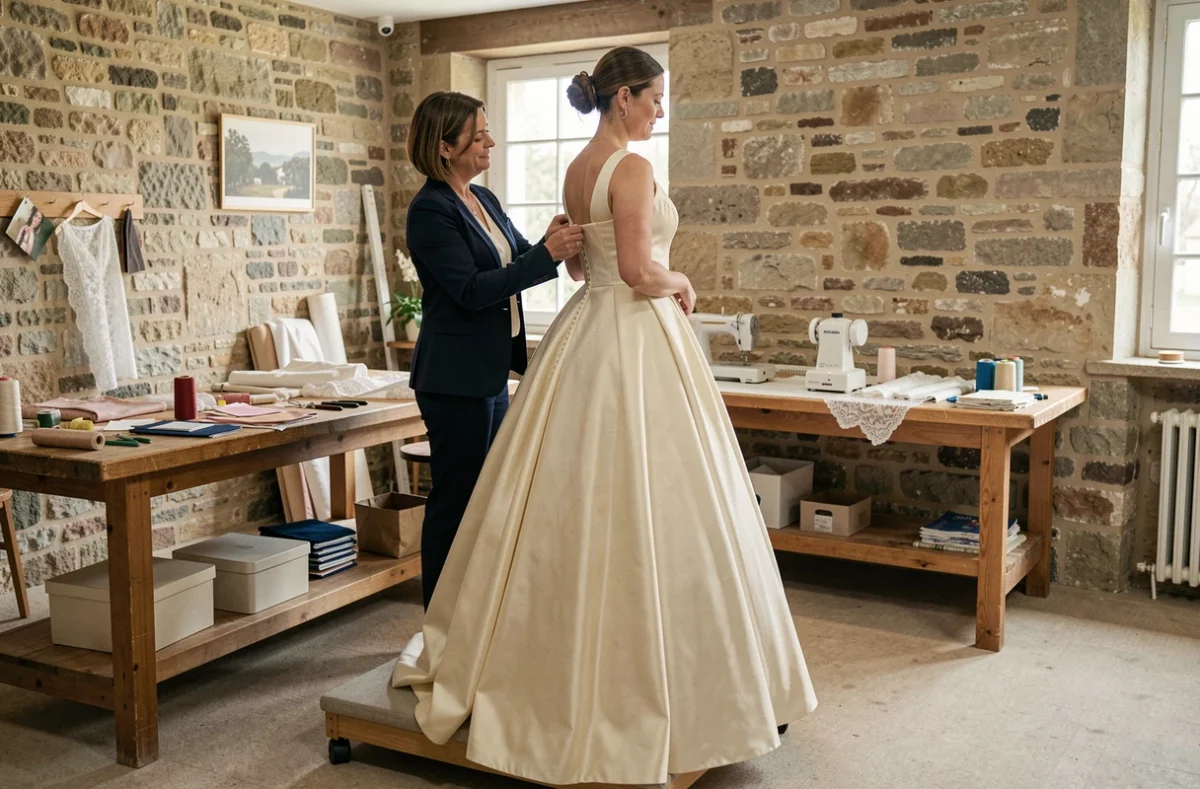
Most brides-to-be plan their schedule around the date they order their dress. The real variable is alterations. Alteration lead times have a greater impact on your schedule than the order itself. Between receiving the dress and the wedding day, you’ll need at least two alteration appointments, and sometimes three if your body shape has changed or structural modifications are required.
This has a direct impact on your budget. The price displayed in a boutique or atelier rarely covers complex alterations. Hemming a multilayer tulle skirt is very different from hemming a simple crepe dress. Adjusting a boned bodice requires corsetry expertise.
What the displayed price may not include
Before comparing Nantes boutiques, clarify what is included in the quoted price:
- Fit alterations (hem, darts, strap adjustments): sometimes included with made-to-measure dresses, rarely with ready-to-wear
- Dry cleaning or steam pressing before the wedding day: some ateliers offer this, while others consider it the bride’s responsibility
- Garment bag and suitable hanger: a logistical detail that helps prevent creases during transport to the ceremony venue
- Matching accessories (veil, belt, stole): sold separately at most boutiques
Comparing offers by the total price after alterations, rather than the catalogue price, gives you a much more reliable picture of the true budget. A made-to-measure atelier that includes three fittings and adjustments in its price may work out cheaper than a designer dress with a lower listed price but extra charges for alterations.
Wedding dress fittings in Nantes: three technical mistakes to avoid
The first mistake is trying on dresses only while standing in front of a mirror. You’ll wear your dress sitting down, walking and dancing. Test each dress with the movements you’ll make throughout the day: raise your arms, sit down, turn around and climb a step. If the boutique won’t let you do this, it’s a warning sign about the quality of the service.
The second mistake is scheduling fittings too early in the morning or late in the day. Your body shape changes over the course of the day (water retention, muscle fatigue). A mid-morning fitting gives you the most representative measurements of what your figure will be like on your wedding day.
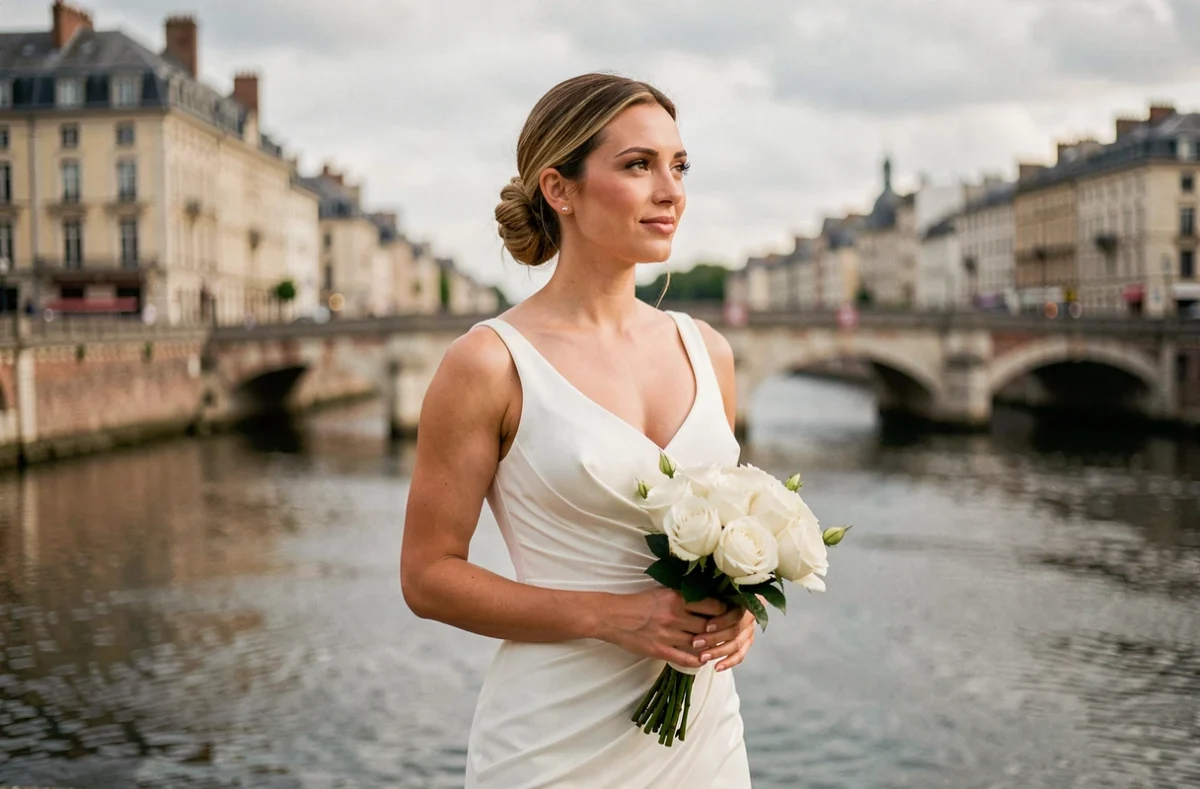
The third mistake concerns lighting. Boutique spotlights are designed to flatter fabrics. Ask to see the dress near a window or in natural light. That’s the light your wedding photos will be taken in, and it reveals the true transparency of the fabrics, the exact shade of ivory or off-white, and any finishing flaws.
Choosing a wedding dress in Nantes is best approached as a technical project as well as an emotional one. A cut suited to getting around the city, fabrics selected for the local climate and a budget based on the full cost, including alterations, all lay the groundwork for a day when your outfit complements every moment instead of restricting you.