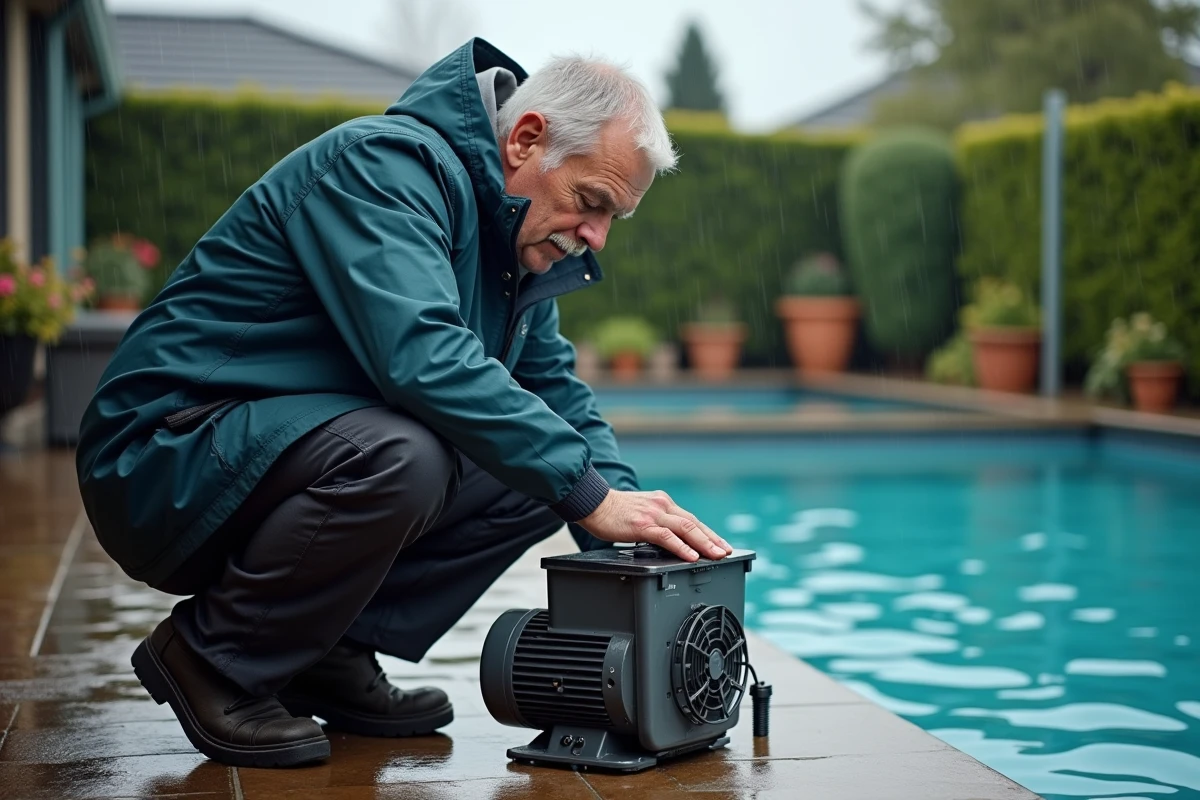
The pool pump ensures the circulation of water to the filter, which allows for the removal of suspended impurities and the distribution of disinfectant throughout the pool. When it rains, this filtration function does not lose its usefulness; it simply changes context. The real question is less about the rain itself than about the type of weather event and the exposure of the installation.
Rain and thunderstorm: two different risks for the pool pump
The confusion between rain and thunderstorms is common, but the stakes are quite different. Moderate rain, even if prolonged, poses no electrical danger to the pump. The water that falls into the pool dilutes the disinfectant, lowers the pH, and carries particles (pollen, dust, organic matter washed in by runoff).
A thunderstorm, on the other hand, presents a problem of electrical surge. Lightning can damage the pump motor, the electrical box, or the probes of an automatic regulator. In this specific case, cutting the power to the technical room protects the equipment. The question of whether to turn off the pool pump when it rains therefore primarily depends on the presence or absence of thunderstorm activity.
To summarize the distinction: rain alone relates to water quality and hydraulic management, while thunderstorms relate to electrical safety. Treating both situations the same way leads either to unnecessary shutdowns or to avoidable risks.
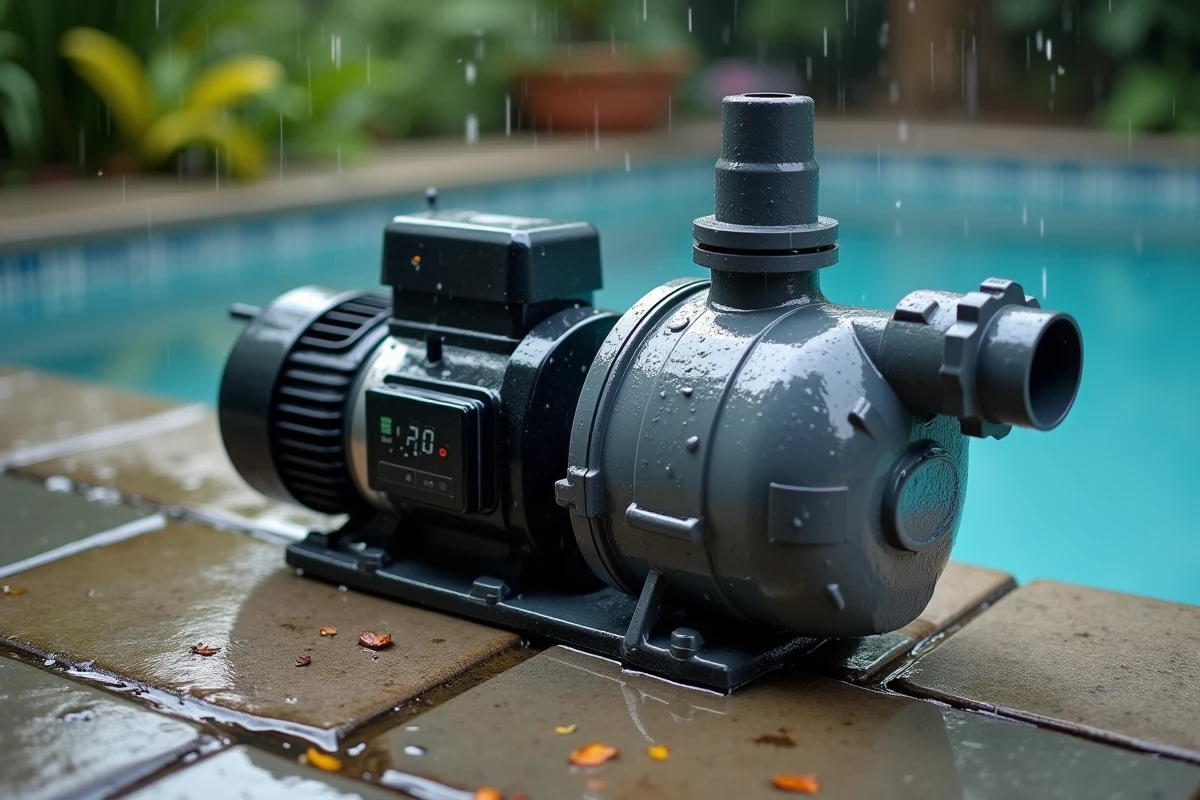
Pool filtration during rain: why maintain circulation
During a rainy episode, rainwater mixes with the pool water. It is softer than treated water and alters the chemical balance of the pool in several ways.
- The pH tends to drop, as rainwater is often slightly acidic (especially in urban or industrial areas). A pH that is too low reduces the effectiveness of chlorine and can irritate the skin.
- The concentration of disinfectant decreases due to dilution. The higher the volume of rain compared to the volume of the pool, the more pronounced the decrease.
- Runoff on the coping, deck, and surrounding areas carries organic matter, soil, and plant debris directly into the pool or skimmers.
Keeping the filtration running during moderate rain prevents the stagnation of these impurities. The filter captures the particles, and the circulation of water promotes an even distribution of residual disinfectant. Turning off the pump at that moment means allowing the pool to absorb pollutants without any defense.
After the rainy episode, checking the pH and disinfectant level remains necessary, whether the pump has run or not. Active filtration during the rain does not exempt from this rebalancing, but it limits the extent of the catch-up.
When to turn off the pool pump: concrete situations
Leaving the pump running is not an absolute rule. Several cases justify a temporary shutdown.
Thunderstorm with lightning risk
As soon as lightning is visible or weather alerts indicate a thunderstorm, turning off the pump and the circuit breaker in the technical room is the priority precaution. A surge related to lightning can fry the motor, damage an electrolyzer, or destroy a regulation electronic board. The cost of replacing these components far exceeds the inconvenience of interrupted filtration for a few hours.
Risk of flooding in the technical room
If the technical room is buried or located below ground level, very heavy rains can cause water to rise around the pump. Running an electric motor with its feet in water creates a risk of short circuit. In this configuration, it is better to stop the installation and protect the equipment (elevation, lifting pump).
Moderate rain without a thunderstorm
This is the most common scenario, and one where filtration benefits from staying active. No particular electrical risk, but a continuous influx of debris and a gradual dilution of treatment. The pump fully plays its role in maintaining water quality.
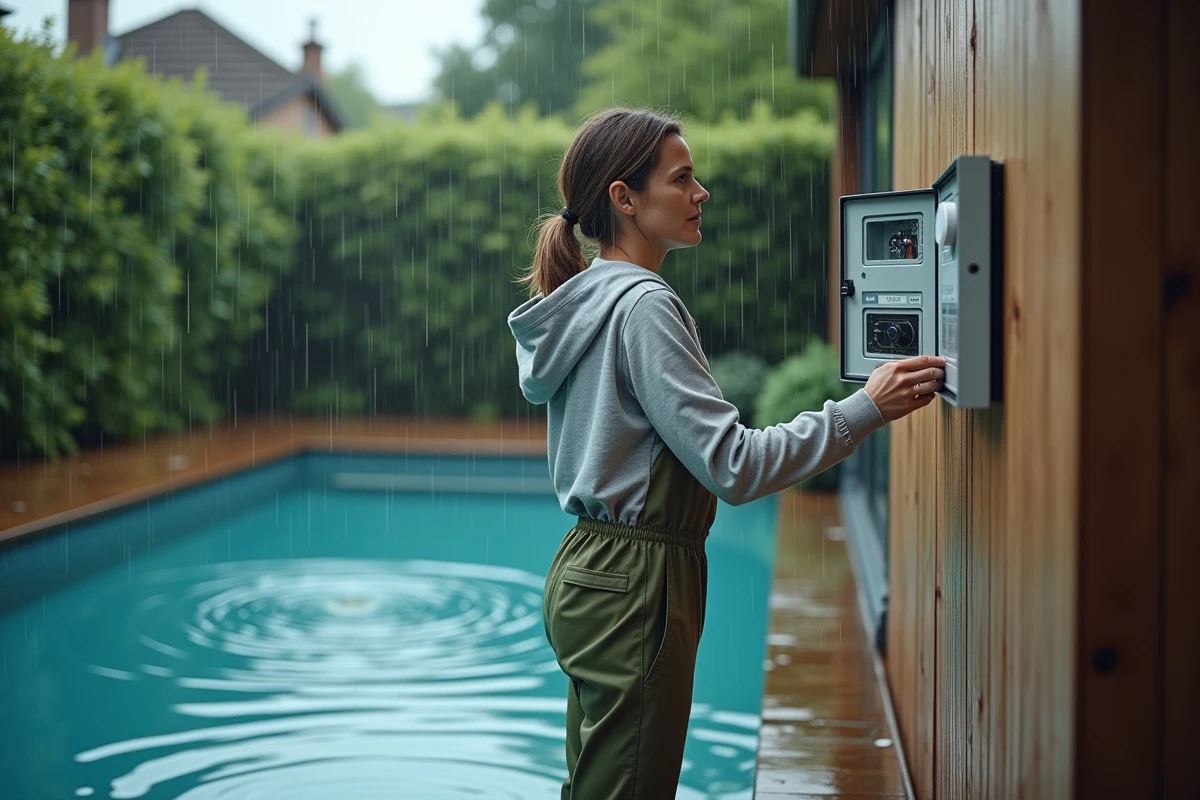
Exposed or protected installation: the often-overlooked criterion
Generic recommendations about the pool pump during rain often overlook a determining parameter: the degree of exposure of the installation. A pool equipped with a closed shelter does not receive rainwater directly. The pool remains protected from debris and runoff, and the dilution of treatment is almost non-existent.
Conversely, an outdoor pool without a cover, surrounded by vegetation, is directly affected by every rainy episode. The volume of contaminants that reaches the pool is much higher, and filtration becomes even more useful during rain.
The technical room deserves the same analysis. A ventilated, above-ground, and covered room does not present the same risk as a semi-buried room with a poorly sealed door. Adapting the decision to the actual level of exposure of each element (pool, pump, electrical box) provides a more reliable answer than any general rule.
Rebalancing after the rain: pH, disinfectant, and extended filtration
Once the rainy episode is over, the work does not stop with the restarting of the pump. The chemical rebalancing of the pool determines the water quality for the following days.
- Measure the pH with a tester (strips or electronic tester) and correct it if the value deviates from the optimal range, which is between 7.0 and 7.4 for chlorine treatment.
- Check the disinfectant level and readjust if dilution has caused it to drop below the effective threshold.
- Empty and clean the skimmer baskets, often clogged with debris washed in during the rain.
- Extend the filtration duration for a few hours after heavy rain, so that the filter treats the entire volume of water.
Brushing the walls and bottom effectively completes this protocol, as organic matter deposited during the rain promotes the development of algae if not removed quickly.
The answer to the initial question boils down to a simple distinction: during rain without a thunderstorm, the pump remains on to protect water quality. As soon as an electrical risk appears (lightning, flooding of the room), the priority shifts to protecting the equipment, and shutting off becomes necessary. The most useful reflex remains to check the weather before deciding, rather than applying a one-size-fits-all rule to all situations.