
The question arises with every change of season, as soon as tights come out of the drawer: should one wear underwear underneath, or are the tights sufficient? Between ingrained habits, fear of a fashion faux pas, and concerns about intimate hygiene, opinions vary. The answer actually depends on three specific parameters: the material of the tights, the duration of wear, and your gynecological sensitivity.
Material of the gusset and intimate health: what really matters under tights
You may have noticed that some tights have a small diamond-shaped piece of fabric in the crotch area? That’s the gusset. Its composition makes all the difference.
A cotton gusset serves the same function as a regular pair of underwear: it absorbs moisture and allows the intimate area to breathe. Several brands now design models explicitly intended to be worn without underwear, featuring a washable cotton gusset comparable to that of a panty. In this case, adding synthetic underwear on top creates a double hermetic layer that traps heat and moisture.
The problem mainly arises with tights made from 100% synthetic fibers (polyamide, elastane) without a cotton gusset. The vulvar area then remains in contact with a fabric that does not breathe. Wearing cotton underwear underneath acts as a protective barrier, a buffer between the skin and the synthetic material. This topic is discussed in detail, particularly the question of underwear and tights on Le Blog Beauté, which reviews various everyday situations.
For shaping tights, compression adds an additional factor. The pressure combined with a non-breathable material over several hours promotes maceration. Wearing cotton underwear under shaping tights reduces the risk of irritation, especially during a long or sedentary day.
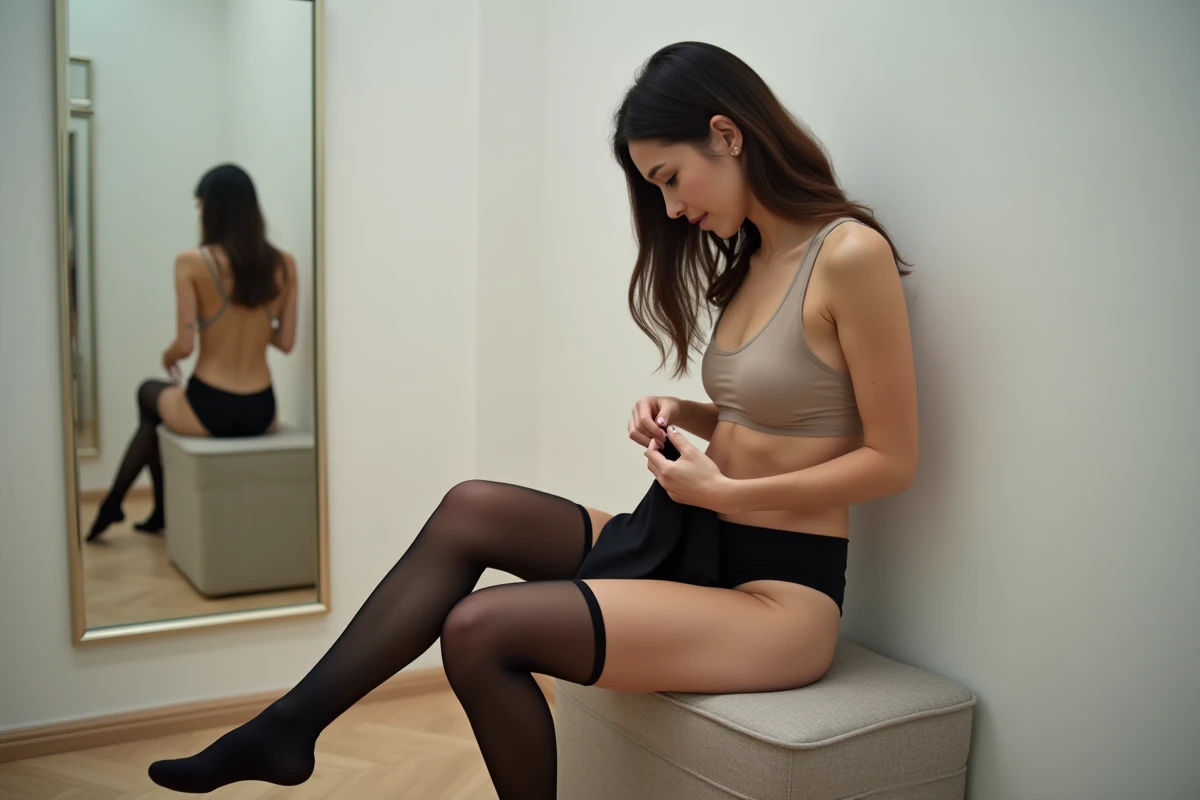
Tights without underwear: in which cases it is suitable
Wearing tights directly on the skin is not absurd, provided you choose the right model. Here are the situations where going without underwear works well:
- The tights have a sufficiently wide, sewn (not just glued) cotton gusset, and the duration of wear does not exceed a typical workday.
- In sports, especially running, there are technical tights with a double-layered insert specifically designed to be worn without underwear. Regular underwear increases friction and the risk of chafing over long distances.
- Under a fitted dress or skirt, removing the underwear eliminates visible seam lines. The debate is increasingly approached from the angle of seam visibility rather than just comfort.
In these three cases, ensure that the tights are clean (worn only once between washes). Tights without underwear imply systematic washing after each use.
Underwear and tights: combinations that cause problems
Not all underwear is created equal under tights. The wrong combo can worsen what you were trying to avoid.
The trap of double synthetic layers
Polyester underwear + polyamide tights without a cotton gusset: this is the most unfavorable configuration for intimate flora. Neither layer absorbs moisture. After several hours of wear, the local temperature rises and creates an environment conducive to yeast infections or irritations.
Menstrual underwear under tights
Menstrual underwear is thicker than regular underwear. Under tight tights, they can create uneven compression zones and visible lines. If you opt for this combination, choose high-waisted tights with enough elasticity to avoid compressing the menstrual underwear against the skin.
Thongs and G-strings
A thong under tights remains visually discreet, but it does not protect the vulvar area from contact with synthetic materials. It combines the disadvantages: a fine seam that can irritate, and almost no protection. A thong under tights offers no real hygienic benefit.

Choosing your underwear under tights in winter: the right criteria
In winter, thick opaque tights (from 50 deniers) are often worn all day. The duration of wear extends the skin’s exposure to a potentially occlusive environment. The choice of underwear then becomes a real comfort criterion.
Opt for cotton underwear, classic cut or boyshorts, without thick lace that would show under the tights. The ideal color is one that closely matches your skin tone or the tights themselves, to avoid a transparency effect if the tights are semi-opaque.
- Cotton or modal for the material: breathable and soft.
- Flat seams or seamless to avoid marks under fitted clothing.
- Appropriate size, neither too tight (unnecessary compression) nor too loose (folds that create bulk).
- Skin tone or matching color with the tights to remain invisible under dresses and skirts.
For sports tights, the logic is reversed: it is often better to skip underwear altogether and choose technical tights designed to be worn alone. Running brands incorporate a double-layered insert and flat seams specifically designed to minimize friction without adding underwear.
The answer can be summed up in one sentence: it all depends on the gusset of your tights and the material of your underwear. A pair of tights with a cotton gusset worn for a few hours stands on its own. A synthetic pair worn all day calls for cotton underwear. The useful reflex is not to choose a side, but to check the composition label before putting anything on.