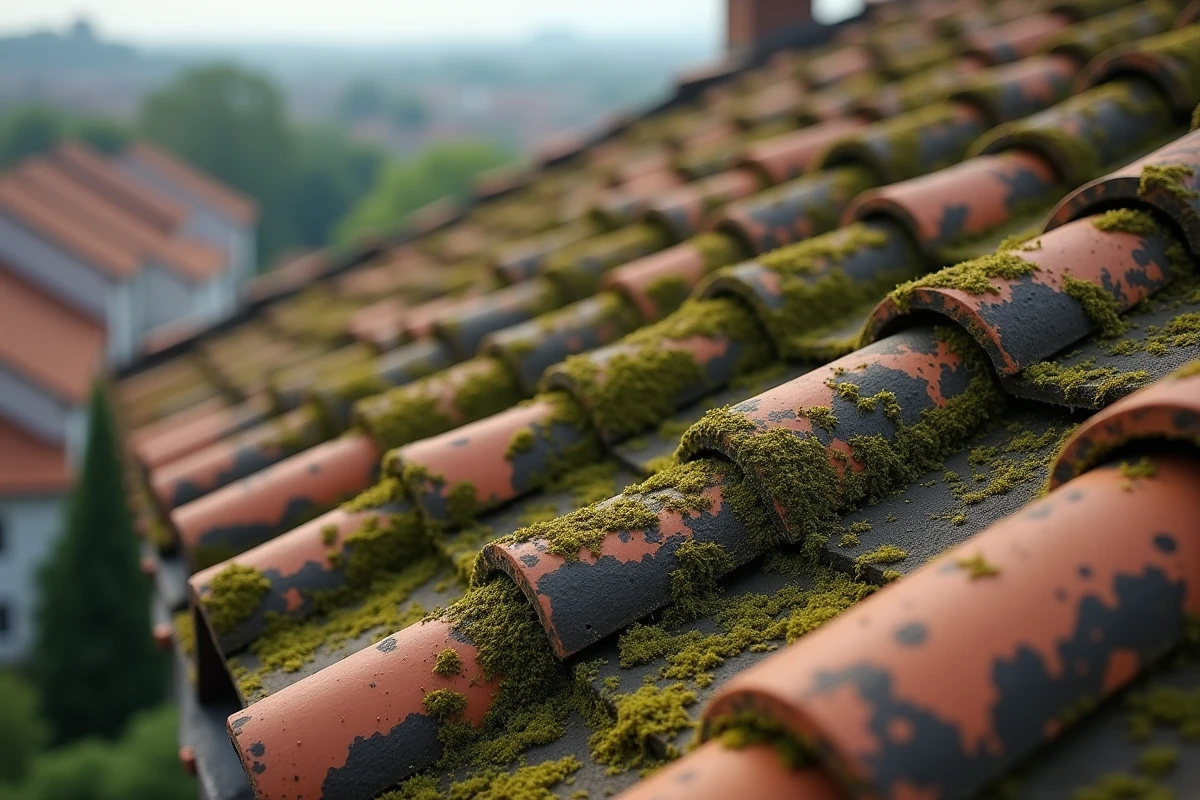
The algae that colonize a roof no longer follow the same cycles as they did ten years ago. Climate change, combined with an increase in fine particle deposits in urban areas, is altering the speed and resistance of these microorganisms. Understanding what has changed allows for the selection of an appropriate treatment, rather than repeating ineffective interventions.
Resistant algae on roofs: how the climate has changed since 2024
A report from ADEME published in March 2026 documents a rising trend of algae on roofs in urban areas. Fine particles from air pollution settle on roofing materials and provide an additional nutrient substrate for algae. This phenomenon accelerates their colonization, even on treated surfaces.
In Northern Europe and along the French Atlantic coast, milder winters and wetter summers extend the active growth period of algae. The French Federation of Roofing Companies (FFBAT) published a report in April 2026 documenting accelerated regrowth of algae on fiber cement roofs despite standard chemical treatments, with repeated failures in oceanic climates.
This observation calls into question the traditional approach of spot moss removal. A treatment that worked five or six years may now last only two seasons under these conditions. To delve deeper into the causes of proliferation and suitable solutions, you can consult the Bricotage site for your roof which details the mechanisms at play.
Comparison of roofing materials against algae
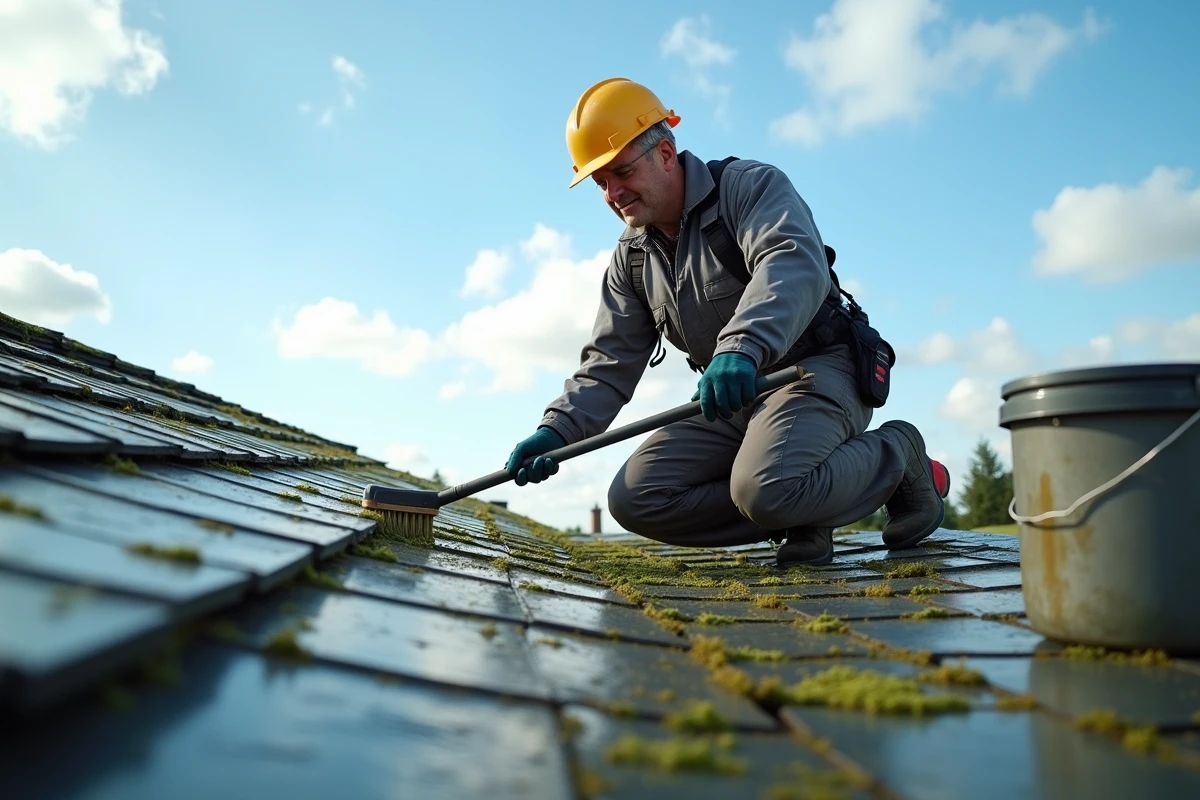
Not all materials react the same way to colonization by algae. The type of surface, its porosity, and its ability to drain water determine the speed of appearance and the difficulty of removal.
| Roofing Material | Sensitivity to Algae | Ease of Cleaning | Treatment Frequency |
|---|---|---|---|
| Clay Tile | High (porous surface) | Medium | Every 2 to 4 years |
| Natural Slate | Moderate | Good | Every 4 to 6 years |
| Fiber Cement | Very High (documented failures by FFBAT) | Difficult | Frequent renewal needed |
| Concrete Tile | High | Medium | Every 3 to 5 years |
| Integrated Photovoltaic Tiles (BIPV) | Low (smooth, self-cleaning surface) | Very Good | Reduction of interventions by 30 to 50% |
The SolarPower Europe report from February 2026 estimates a 30 to 50% reduction in interventions on BIPV tiles compared to traditional tiles. Their smooth surface prevents spore adhesion. This is not an argument for replacing an entire roof, but a factor to consider during a complete renovation.
On the other hand, fiber cement presents concentrated difficulties. Its texture promotes moisture retention, and conventional treatments struggle to penetrate the material’s structure. On this substrate, a water-repellent product alone is not sufficient.
Ban on chlorothalonil: which moss removal products remain authorized
Since January 2025, a decree from the Ministry of Ecological Transition prohibits chlorothalonil-based biocides for moss removal and anti-algae treatment in France. This molecule, long used in consumer roof cleaning products, is now considered too persistent in runoff water.
This ban is pushing the market towards bio-sourced alternatives. Solutions based on pelargonic acid or encapsulated copper salts are gaining ground. Their mode of action differs: instead of destroying algae through brutal chemical contact, they gradually inhibit their metabolism.
- Pelargonic acid-based products act by cellular desiccation and degrade quickly in the environment, requiring more frequent application
- Encapsulated copper salt formulations release their active ingredient over several months, providing prolonged protection but requiring precise dosing to avoid accumulation in soils
- Enzymatic treatments, still marginal, specifically target the chlorophyll of algae without attacking the roofing material
The choice of product directly depends on the material. On a porous clay tile, a slow-release treatment is more suitable. On slate, a fast-acting product followed by a water rinse is usually sufficient.
Preventive or curative treatment: analysis of durability gaps
The distinction between prevention and curative intervention radically changes the cost and frequency of roof maintenance.
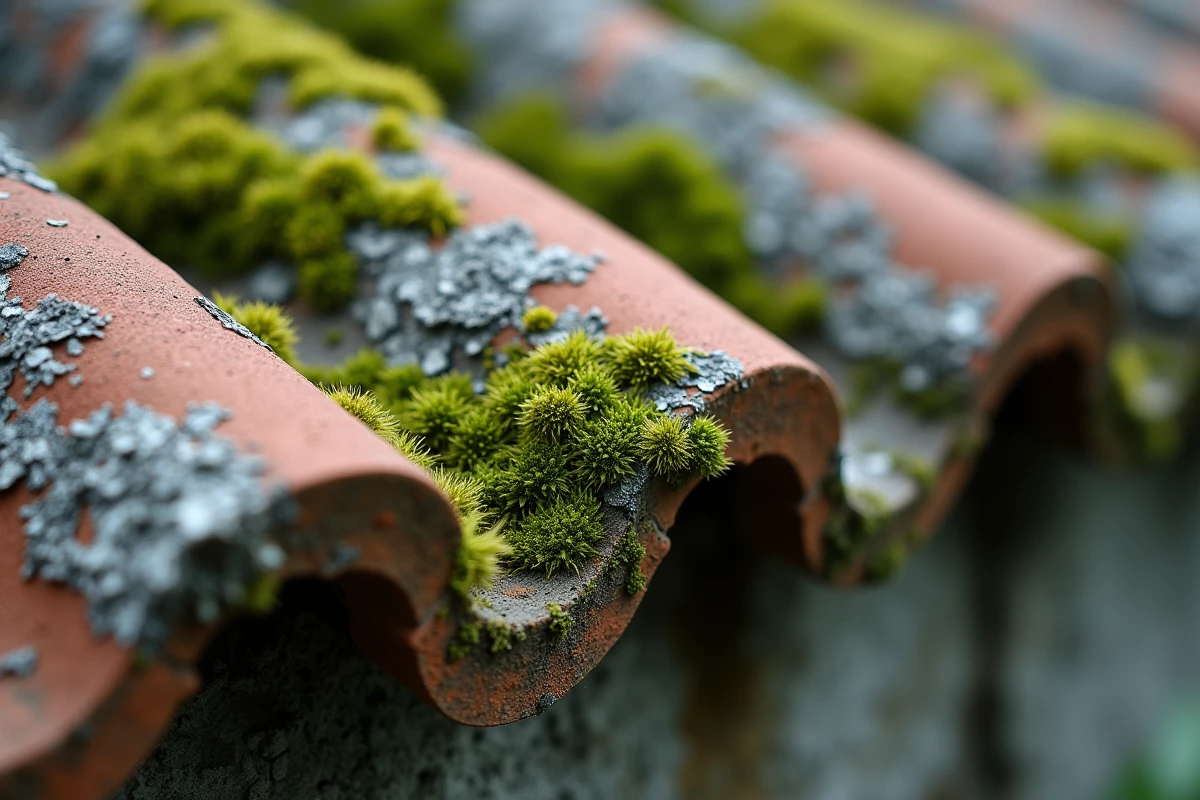
A water-repellent treatment applied after cleaning reduces the porosity of the material and limits spore adhesion. On concrete or clay tiles, this approach significantly extends the time before algae reappear. However, applying a water-repellent on a roof already colonized, without prior cleaning, is counterproductive: the product seals moisture under the layer of algae.
Curative cleaning, on the other hand, faces a mechanical constraint. High-pressure cleaning, often favored by individuals, damages porous tiles and accelerates their aging. FFBAT recommends low-pressure cleaning combined with a biocide product suitable for the substrate.
- On clay tile: low-pressure cleaning, then application of a bio-sourced product, then water-repellent after complete drying
- On slate: manual brushing or gentle rinsing, light anti-algae treatment, no water-repellent (slate is naturally low in porosity)
- On fiber cement: professional intervention recommended due to the fragility of the material and risks related to asbestos in older installations
Environmental factors to monitor
The orientation of the roof, the proximity of trees, and the local humidity level condition the frequency of treatment. A north-facing roof, shaded by vegetation, will develop algae two to three times faster than a clear south-facing slope. Trimming branches overhanging the roof remains the most effective and least costly preventive measure.
The key takeaway from the SolarPower Europe report is that smooth and self-cleaning surfaces reduce interventions by 30 to 50%. Whether through the choice of new materials during a renovation or the application of a film-forming water-repellent on an existing substrate, reducing surface roughness remains the most sustainable lever against algae colonization.