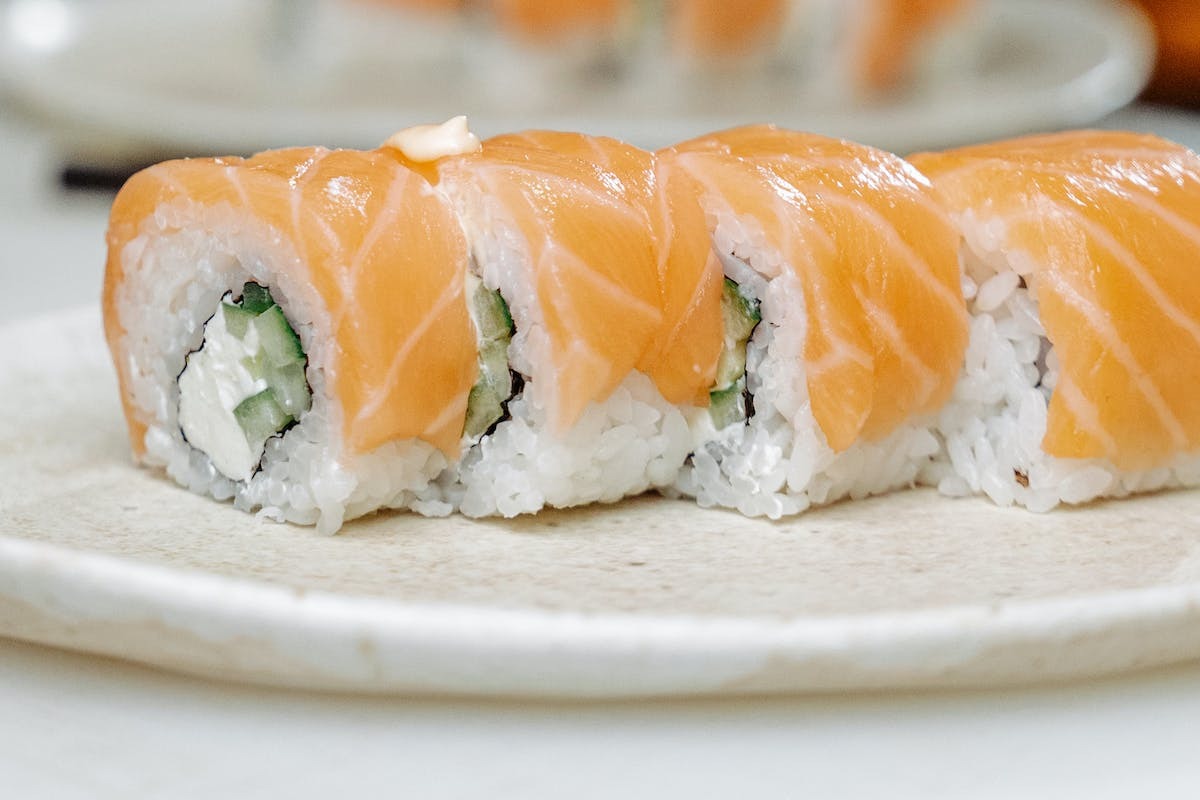
Choosing quality is essential when it comes to preparing sushi and sashimi, traditional Japanese dishes where raw fish reigns supreme. At the heart of these marine delights, salmon offers a tender texture and rich flavor, provided you select the best specimen. But how can you discern superior quality among a wide selection of salmon? From freshness to origin, color to texture, several factors must be considered. Here are essential tips to help you select the perfect salmon for your sushi and sashimi.
Salmon Varieties for Sushi and Sashimi: Delicious Choices!
In the gastronomic galaxy of sushi, the choice of fish is crucial. So, which salmon for sushi should you choose? The answer varies depending on your taste and ethical preferences.
If you’re looking for a soft, melting flesh, Atlantic Salmon (Salmo salar) is often favored. Its delicate flavor pairs wonderfully with the vinegared rice typical of sushi. The farming conditions for this salmon are better controlled than for other species.
For a more pronounced flavor without sacrificing tenderness, opt for Coho Salmon (Oncorhynchus kisutch). With its firm orange-red flesh and powerful aroma, it offers a striking contrast to the subtle acidity of sushi rice.
Sockeye Salmon (Oncorhynchus nerka), on the other hand, delights with its shades ranging from dark red to scarlet: a true visual masterpiece on your plate! Beyond its attractive appearance, this variety offers a dense texture and a robust, slightly sweet flavor that makes it a favorite among fish lovers who appreciate bold tastes.
If you’re looking for something a bit different yet equally tasty, Chinook Salmon (Oncorhynchus tshawytscha) offers tender bright orange flesh with a subtle aroma that will give your sushi an unexpected yet always delightful note.
Which salmon for sushi should you choose? The answer is as varied as the palette of flavors offered by these fish. However, regardless of your final choice, always prioritize fresh products from sustainable sources.
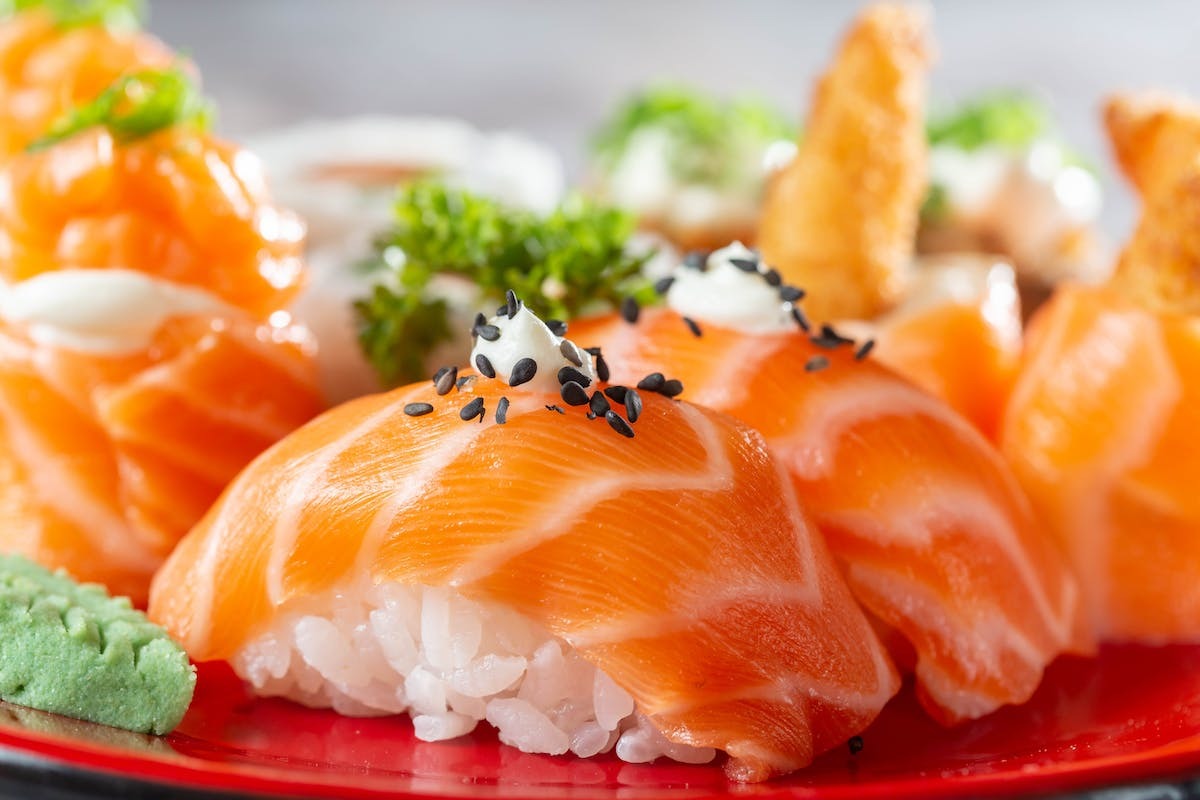
Salmon Quality for Sushi and Sashimi: Essential Criteria
When selecting your salmon for sushi and sashimi, you should choose high-quality salmon thanks to the ideal conditions provided by their cold, clean waters.
Regarding the farming methods for salmon, it’s best to opt for environmentally friendly farms that use sustainable practices such as organic or non-GMO feed, as well as low density in the ponds so that the fish can develop harmoniously.
To ensure that the product you purchase has been raised and processed under respectful conditions, look for certifications such as the ASC label (Aquaculture Stewardship Council) which guarantees responsible farming.
Don’t hesitate to ask your fishmonger or a seafood specialist for advice. They can guide you toward the best choices based on your taste preferences and ecological values.
To choose the best salmon for your sushi and sashimi, prioritize freshness, the origin of the fish, and sustainable farming practices. Opt for products that have received recognized certifications to ensure impeccable quality while supporting responsible fishing.
Sustainable Fishing: Choose Responsible Salmon for Your Sushi and Sashimi
In the interest of preserving marine resources, it is essential to opt for sustainable fishing techniques when choosing your salmon for your sushi and sashimi. Among these environmentally friendly techniques are line fishing and gillnet fishing.
Line fishing is a traditional method that involves catching fish one by one using a rod with a hook. This technique has several ecological advantages: it allows for increased selectivity by specifically targeting the desired species while minimizing bycatch. It significantly limits the risks of overfishing due to its low impact on marine populations.
As for gillnet fishing, it involves using a large net stretched between two boats that effectively encircles and captures fish. You should prioritize mesh sizes suitable for different species to avoid any unintended catch or damage to the marine environment. This technique requires strict monitoring to ensure its responsible use.
Preparing Salmon for Sushi and Sashimi: Essential Tips
Once you have chosen a salmon from sustainable practices, it’s time to prepare your sushi and sashimi. Here are some tips to enhance the delicate flavor of the fish:
Make sure to have fresh, high-quality salmon. Preferably choose a whole fish rather than pre-cut fillets, as this allows for better control during slicing.
Before any handling, be sure to thoroughly clean your cutting board and utensils to avoid any cross-contamination between foods.
To create perfectly thin slices for sashimi, use a sharp knife and make slow movements while maintaining consistent pressure on the fish. Ensure that the slices are uniformly cut.
When preparing sushi, consider lightly marinating your salmon before use to add an extra touch of flavor: tamari, sweet soy sauce, or flavored olive oil can be used sparingly.
If you want to add a unique touch to your culinary creations, feel free to experiment with different spices and herbs such as freshly grated ginger or lime zest that will subtly enhance the tasting experience.
To best preserve the freshness of your prepared salmon, wrap it carefully in plastic wrap and place it in the refrigerator until serving. Be sure to consume it within 24 hours of preparation.
By following these simple yet effective tips, you will be able to enhance your salmon for your sushi and sashimi. Remember that the quality of the ingredients used is essential for an unforgettable tasting experience. So take the time to choose your fish wisely and apply all your skills during preparation.
Errors to Avoid: Choosing the Perfect Salmon for Your Sushi and Sashimi
When faced with a fish display, avoid being seduced by an artificially bright color. Indeed, some producers add colorants to make the salmon visually more appealing. Instead, prioritize natural colors, ranging from pale pink to orange-red.
Another common mistake is not paying attention to the origin of the salmon. It is preferable to choose fish from a region known for its sustainable and environmentally friendly practices. Labels such as MSC (Marine Stewardship Council) or ASC (Aquaculture Stewardship Council) can also assist you in your selection.
Be cautious of misleading terms used on packaging like ‘fresh salmon’ or ‘farmed salmon’. The term ‘fresh’ can mean different things depending on the regulations in each country, and ‘farmed salmon’ is not necessarily synonymous with poor quality. Research the farming conditions before making your choice.
For purchasing, a good piece of salmon should be firm and elastic to the touch, without any visible marks or suspicious odors. Also, avoid any fillet that appears discolored or dried out, as this could be a sign that the fish has lost its freshness.
Don’t underestimate the importance of price. While quality salmon may be slightly more expensive, it is better to invest in a product that will provide you with an optimal tasting experience rather than opting for a cheap option that lacks flavor.
By avoiding these common mistakes when choosing salmon, you will be able to select a fresh, quality fish for your sushi and sashimi. Take the time to carefully examine every aspect before your purchase to ensure a tasty experience that respects the main environmental criteria. Your palate and the planet will thank you.
Accompaniments to Enhance Salmon in Your Sushi and Sashimi
Once you have chosen the ideal salmon for your sushi and sashimi, it’s time to think about the accompaniments. Here are some recommendations to enhance the flavors of this delicious fish.
Don’t underestimate the importance of rice in sushi preparation. Always opt for Japanese rice specially designed for this culinary specialty. It has a slightly sticky texture that allows the ingredients to hold together without easily falling apart when taking a bite.
Consider the soy sauce or shoyu that will accompany your creations. Choose a traditional soy sauce made using ancestral methods and with natural ingredients like fermented wheat and fermented soy. Avoid industrial versions containing chemical additives or excessive salt that could mask the subtle aromas of the salmon.
To further enhance the flavors, add a bit of wasabi to your sushi or serve it on the side. Freshly grated wasabi offers a spicy yet balanced experience that pairs perfectly with the sweetness of salmon.
Don’t forget to include some fresh garnishes to add texture and freshness to your plate. Thin slices of green onion, cucumber, or radish can add a crunchy touch, while shiso leaves, nori seaweed, or pickled ginger will bring complementary flavors that enhance those of the salmon.
By following these recommendations, you can enjoy your salmon sushi and sashimi in all their glory. The harmonious marriage between fresh fish and thoughtfully chosen accompaniments will make every bite unforgettable. Prioritize the quality of the ingredients and let your creativity guide you to create unique combinations that will delight your taste buds.