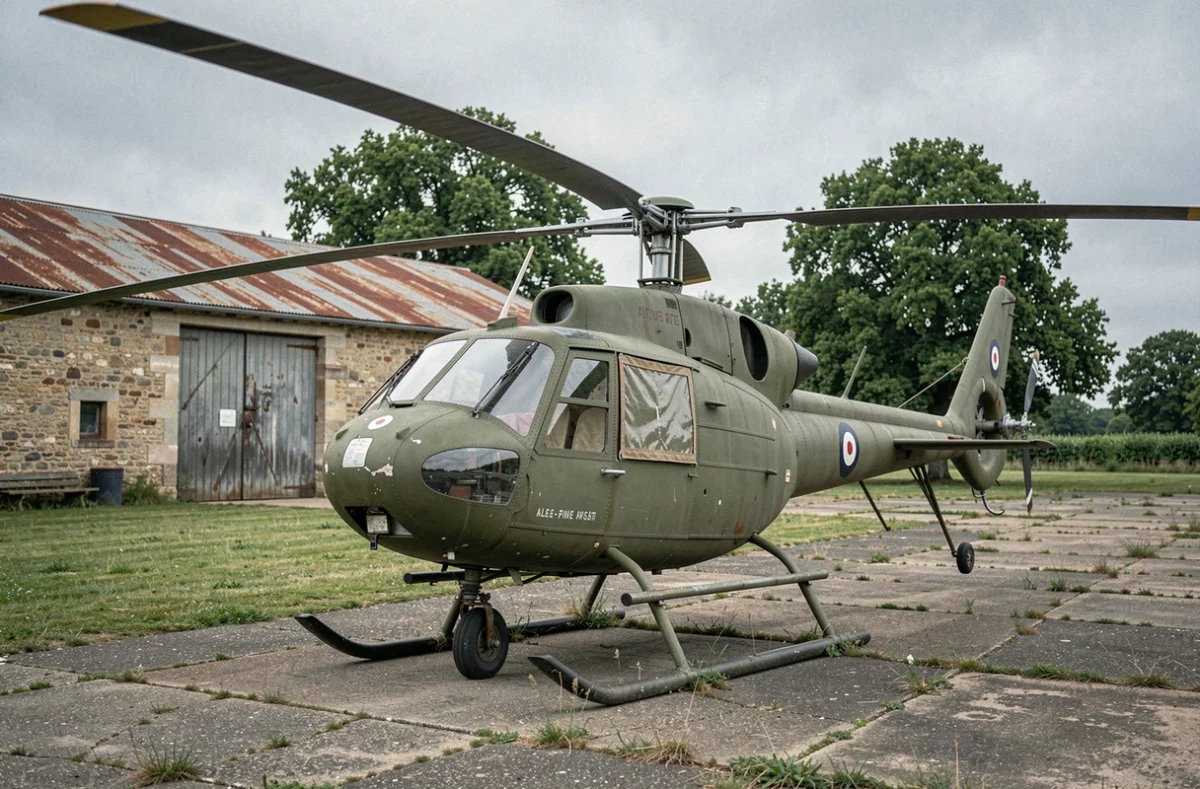
The French military helicopter does not descend from a single program launched after World War II. It results from a series of technical and doctrinal bifurcations, where each conflict imposed constraints that the previous aircraft could not absorb. Understanding this evolution requires distinguishing between what pertains to pure aeronautical engineering and what is based on field experience feedback.
Dronization and Aerial Combat: What Redefines the Military Helicopter Today
The ongoing renewal of the French military helicopter fleet is not limited to replacing aging airframes. It redefines the very architecture of aerial combat. The main trend has a name: dronization.
Three programs illustrate this transformation within the Army Light Aviation (ALAT). The DEDAL project explores target designation by drone for the Tiger. COLÉOPTÈRE is working on light tactical drones. PROMÉTHÉE studies the launch of devices from a helicopter in flight.
The common point of these projects lies in a paradigm shift. The helicopter becomes a command node rather than a simple armed platform. The functions of reconnaissance and deception are gradually migrating to unmanned vectors, while the crew focuses on decision-making and coordination.
For those wishing to trace the origins of these transformations, the fascinating history on Communiqués du Net outlines the foundational steps of the military helicopter in France.
The emerging doctrine aims to use drones as scouts or shields, reducing crew exposure and allowing strikes beyond direct line of sight. This logic marks a clear break from the aerial combat model inherited from colonial wars, where the helicopter alone ensured reconnaissance and fire.
Tiger and Caïman: Two Philosophies for French Forces
The Tiger and the Caïman embody two complementary approaches to aeromobile combat. The Tiger, an attack helicopter, was designed for armored destruction and close air support. The Caïman (NH90 in land version) fulfills tactical transport and logistical maneuver missions under threat.
Their coexistence in the ALAT fleet is not an industrial coincidence. It reflects a doctrinal choice: to clearly separate the aggression function from the infiltration function. The French armed forces learned this lesson from engagements where versatile aircraft, like the armed Gazelle, had to fulfill contradictory roles during the same mission.
Rapid Integration of New Capabilities on the Tiger
The DGA indicated that a data link was integrated into a Tiger in less than three weeks in March 2026. This adaptation tempo, once unthinkable for such a complex program, reflects an evolution in engineering methods within the DGA’s expert centers.
This rapid integration capability changes the very nature of a military helicopter’s life cycle. Instead of freezing specifications for a decade, forces can graft technological bricks over time based on operational feedback.
Operational Readiness: The Invisible Factor of Longevity
The history of the French military helicopter is not limited to design offices. Operational readiness determines as much the lifespan of an aircraft as its initial design.
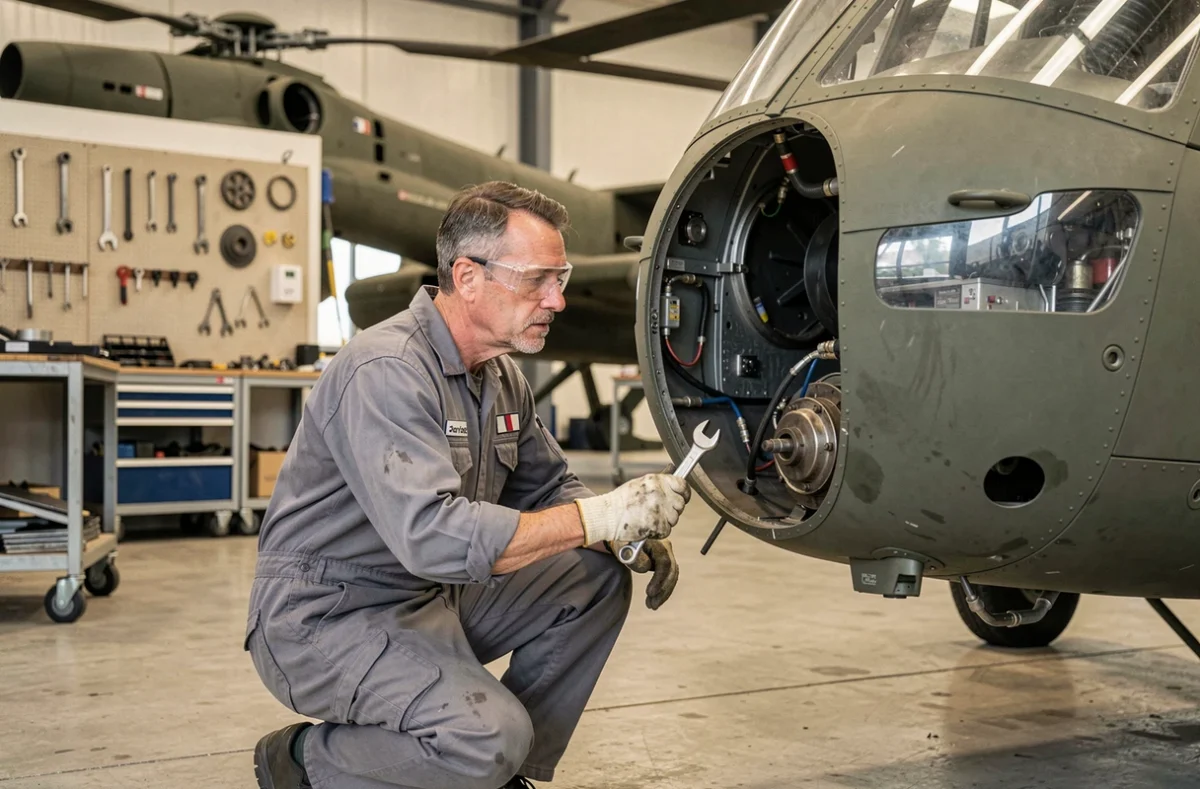
The Gazelle, which entered service in the French forces in the 1970s, remains a case in point. Its versatility and mechanical robustness have allowed it to endure several decades of operations. The industrial aeronautics workshop (AIA) in Clermont-Ferrand continues to maintain this fleet, preserving specific industrial and technical know-how.
- Maintenance extends the operational relevance of an aircraft well beyond its theoretical lifespan, as shown by the Gazelle after more than fifty years of service.
- Maintenance skills constitute a strategic industrial heritage: without the AIA in Clermont-Ferrand, the Gazelle would have left service much earlier.
- The cumulative cost of maintenance often exceeds that of acquisition, making it a budgetary lever as structuring as the choice of the program itself.
Survivability and Range Against Contemporary Threats
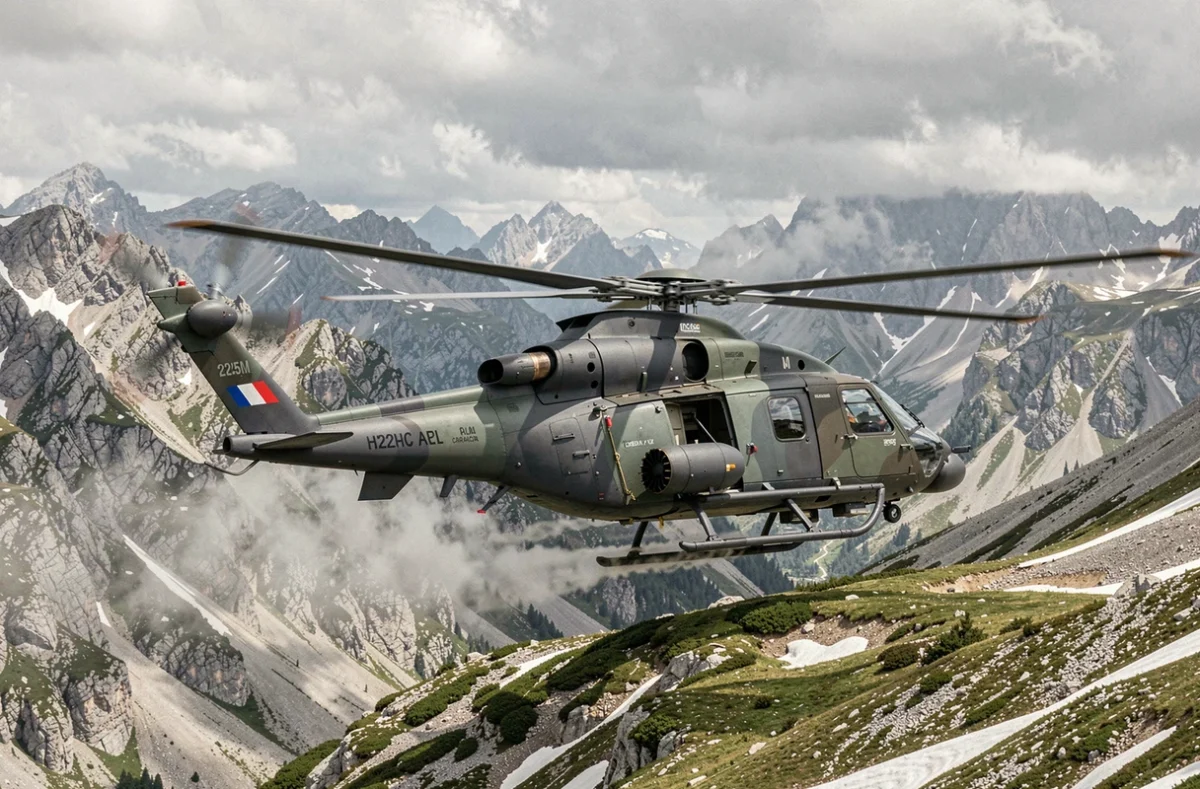
Recent conflicts have placed helicopter survivability at the center of doctrinal concerns. Portable anti-aircraft systems have multiplied on operational theaters, making classic flight profiles (prolonged hover, linear approach) much riskier.
The French response combines two axes. The first is technological: modular armor, missile launch detectors, infrared countermeasure systems. The second is tactical: using drones as scouts allows mapping threats before engaging the manned helicopter.
Range as a Protection Factor
Striking beyond the direct line of sight mechanically reduces crew exposure. This logic, already present in ground artillery, now applies to aerial combat. Drones become the advanced eyes of the helicopter, pushing the contact line back without exposing the main aircraft.
This doctrinal shift explains why future programs prioritize connectivity and interoperability with unmanned vectors, rather than just onboard firepower. The French military helicopter of the next cycle will not necessarily be faster or heavier than its predecessors, but it will be better connected.
The evolution of French military helicopters follows a constant since the post-war period: each generation corrects the limits revealed by the previous conflict. The difference with the current cycle lies in the nature of the correction. It is no longer just about reinforcing the airframe or adding a weapon system, but about rethinking the place of the manned aircraft in a hybrid combat ecosystem, shared with drones and tactical data networks.