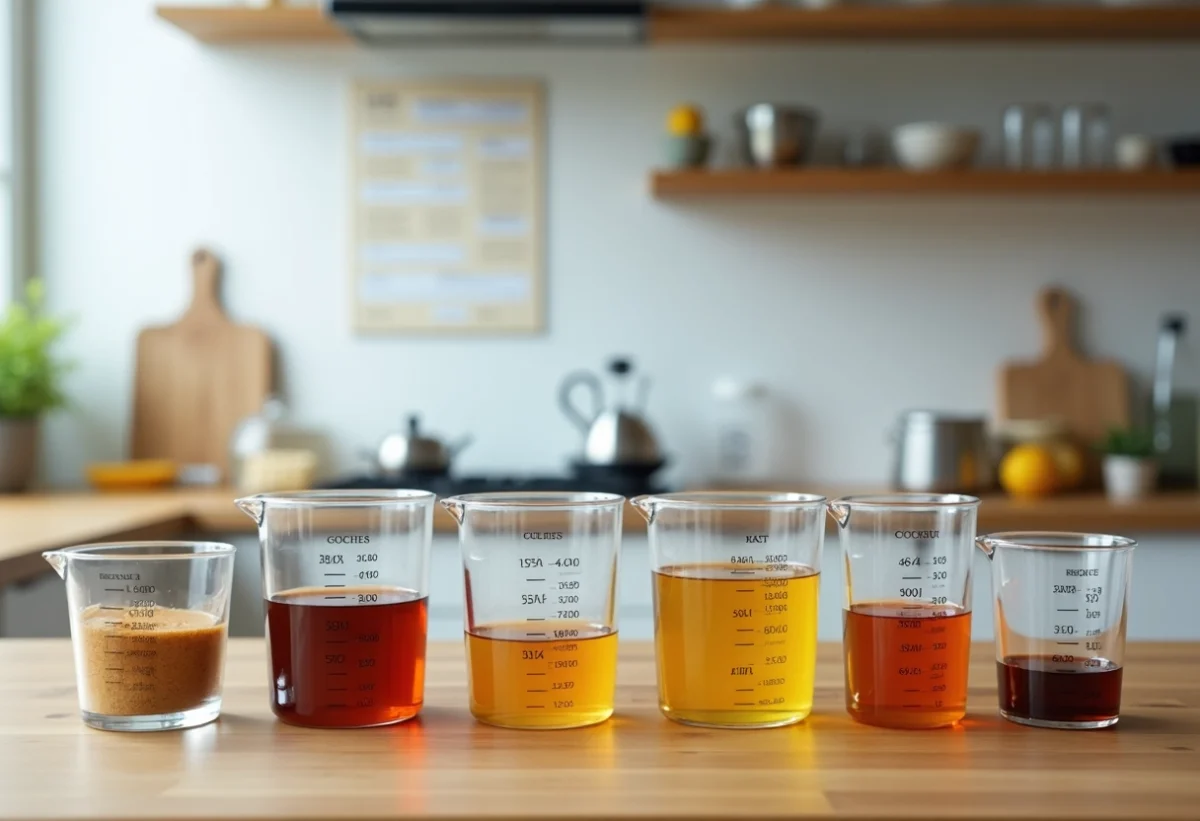
In cooking and baking, precision is essential for successfully executing recipes. Whether following a cookbook or an online recipe, liquid measurements can vary from country to country and create confusion. Between milliliters, liters, cups, and ounces, it’s easy to get lost.
Mastering these conversions not only ensures the success of your dishes but also allows you to explore international recipes without fear. Whether you are preparing a delicate sauce or a fluffy cake batter, understanding these equivalents offers you creative freedom and increased precision in your culinary creations.
The Basics of Liquid Measurement Conversions in Cooking and Baking
Cooking, especially when it comes to baking, requires a nearly scientific rigor in measurements. To navigate between different metric and imperial systems, here are some essential equivalents.
- Teaspoon: 5 ml
- Tablespoon: 15 ml
- Tea cup: 20 cl
- Medium glass: 200 ml
- Coffee cup: 10 cl
- Wine glass: 100 ml
- Medium bowl: 25 cl
- Large bowl: 50 cl
These figures help avoid common mistakes when converting international recipes. For example, 1/20 of a liter to ml corresponds to 50 ml, a conversion often required in Anglo-Saxon recipes.
Conversion Table for Liquid Measurements
| Unit | Equivalent in milliliters |
|---|---|
| 1 teaspoon | 5 ml |
| 1 tablespoon | 15 ml |
| 1 tea cup | 200 ml |
| 1 medium glass | 200 ml |
| 1 coffee cup | 100 ml |
Follow these guidelines to convert measurements accurately. Using a measuring cup or a digital kitchen scale can also improve precision. Whether you are working with milliliters or centiliters, a solid understanding of the equivalents will ensure consistent and precise results.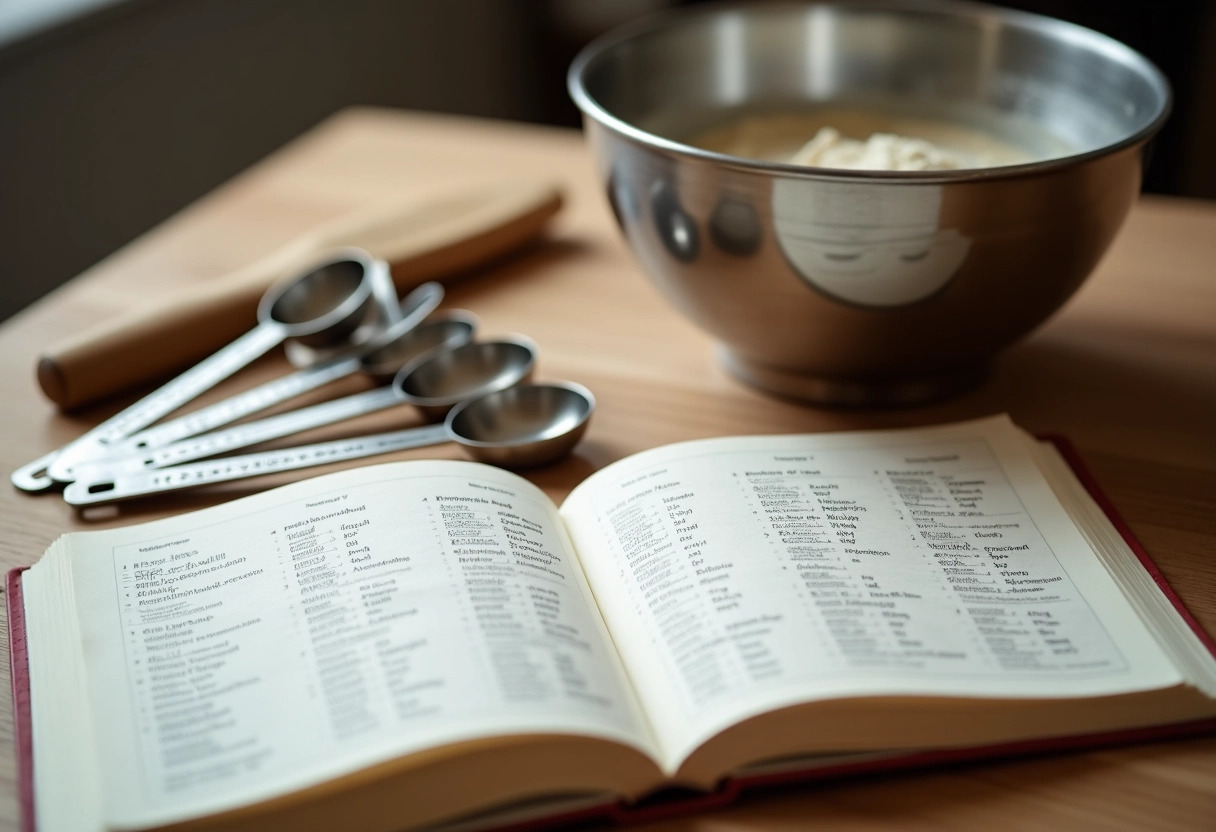
Techniques and Tips for Accurate Measurements
To ensure precision in your recipes, several techniques and tips are essential. Use appropriate measuring utensils and follow these recommendations.
Using Measuring Cups and Spoons:
- Measuring cups typically display graduations in milliliters and centiliters. Prefer models with a flat base for more stability.
- Tablespoons and teaspoons should be standardized. One tablespoon equals 15 ml and one teaspoon equals 5 ml.
Weighing Liquid Ingredients:
- For increased accuracy, use a digital kitchen scale. Place a container on the scale, tare it to zero, and then add the liquid to measure.
- Adopt this method for viscous ingredients like honey or maple syrup.
Equivalents for Common Ingredients
| Ingredient | Average Weight |
|---|---|
| Egg | 50 g |
| Egg white | 30 g |
| Egg yolk | 20 g |
| Carrot | 100 g |
| Medium zucchini | 200 to 250 g |
Temperatures and Quantities:
- Consider temperature variations that can affect the density and volume of liquids. For example, a heated liquid may expand.
- Be precise with quantities to avoid errors. For example, 1 liter equals 1000 ml.
Follow these practices for accurate measurements and master your recipes. Using appropriate tools and knowing the equivalents will help you achieve consistent results, whether in cooking or baking.